Fire escapes · Painting & coating
Fire Escape Painting & Rust Protection
Short answer: A good fire escape paint job is mostly prep: remove loose rust and paint, treat and prime bare steel, then topcoat. Before any of that, we check the steel, because paint can hide parts that have rusted through.
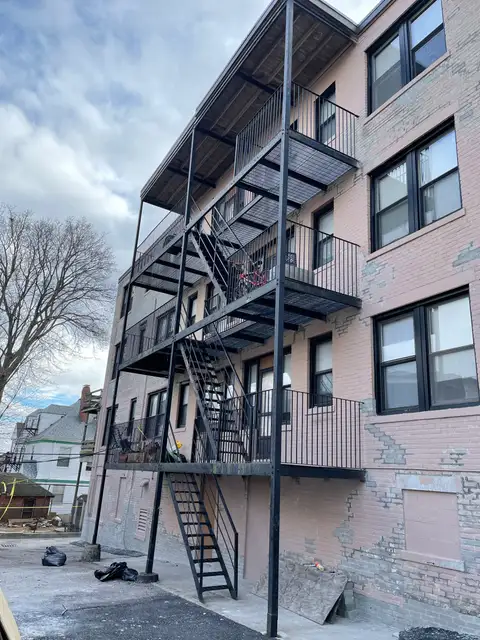
Check the steel before the paint
A fresh coat makes a fire escape look new, and that's the risk: paint can cover a bracket that has lost half its thickness or a platform bar that's rusted through on the underside. Painters aren't asked to judge that. We are. Before we paint, we go over the fire escape the way an inspection would and tell you about anything that needs repair first.
If your five-year certification is coming up, do it in this order: inspection, repairs, then paint. Painting first means scraping again around every repair. See inspection and certification.
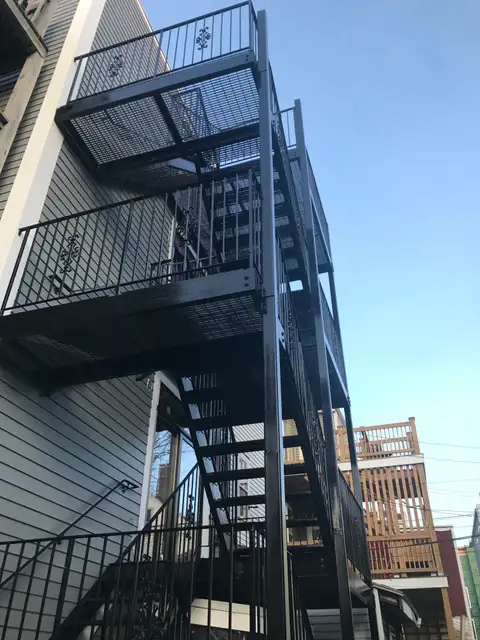
How we paint a fire escape
- 01
Protect what's below
Drop cloths and covers over walkways, cars, plantings and windows; we tell tenants which windows to keep shut.
- 02
Remove loose rust and paint
Scrapers, wire brushes and power tools take off everything loose. Sound, well-bonded old paint can stay; flaking paint cannot.
- 03
Treat and prime bare steel
Every spot of bare metal gets a rust-inhibiting primer the same day it's exposed, so new rust doesn't start under the paint.
- 04
Full coats
Primer over the whole fire escape where needed, then the topcoat. Our standard finish is a direct-to-metal (DTM) industrial paint.
- 05
Moving parts
Drop ladder guides and hinges are cleaned and kept free so paint doesn't seize them.
- 06
Walk-through
We go over every level with you or your manager before we leave.
What decides how long the paint lasts
Prep
- How much loose rust and paint was removed
- Whether bare steel was primed the same day
- Clean, dry steel when coated
Exposure
- Salt air near the coast and road salt below
- Standing water on platforms and in corners
- Sun on south and west walls
Upkeep
- Touching up chips before rust spreads
- Keeping planters and storage off the grating
- Clearing leaves and ice-melt residue
Fire escapes in New York City
If you own a building in New York City, painting is written into the rules: the Housing Maintenance Code (§27-2014) requires owners to keep fire escapes painted with two coats of contrasting colors and to scrape and repaint them when they corrode, and the Fire Code (FC 1027.7.1) requires every fire escape component to be painted or otherwise protected from deterioration. See our New York page.
Questions we get asked
How often should a fire escape be painted?
When the paint starts to fail: flaking, chalking, or rust spots breaking through. Coastal exposure, road salt and standing water shorten that. Touching up chips each year makes a full repaint last longer.
Can you paint a fire escape in winter?
Paint has minimum temperature limits for the steel and the air, printed on the product. In cold months we can do repairs and prime, and topcoat when it's warm enough.
Does painting renew the certification?
No. The five-year certification is a structural examination, separate from painting. We often do both on the same job: inspect, repair, paint, then file.
What color do fire escapes come in?
Black is most common in the Boston area, and it's our usual finish. We can match another color; in a historic district, check whether the commission has a say.
Related
Fire escape repair
Fix the steel before it gets painted.
Inspection & certification
The five-year examination and affidavit.
5 warning signs a fire escape needs repair
What to look for from the sidewalk and from the platform.
Blasting, galvanizing & powder coating
Shop finishes for railings, fences and gates.
Iron through New England winters
Season-by-season upkeep for exterior ironwork.
New York
Our New York service page.