
MOST EXTERIOR STAIRS ARE A WAY UP. THIS ONE FLOATS.
The difference is in three details you can see from the street — and one you can't.
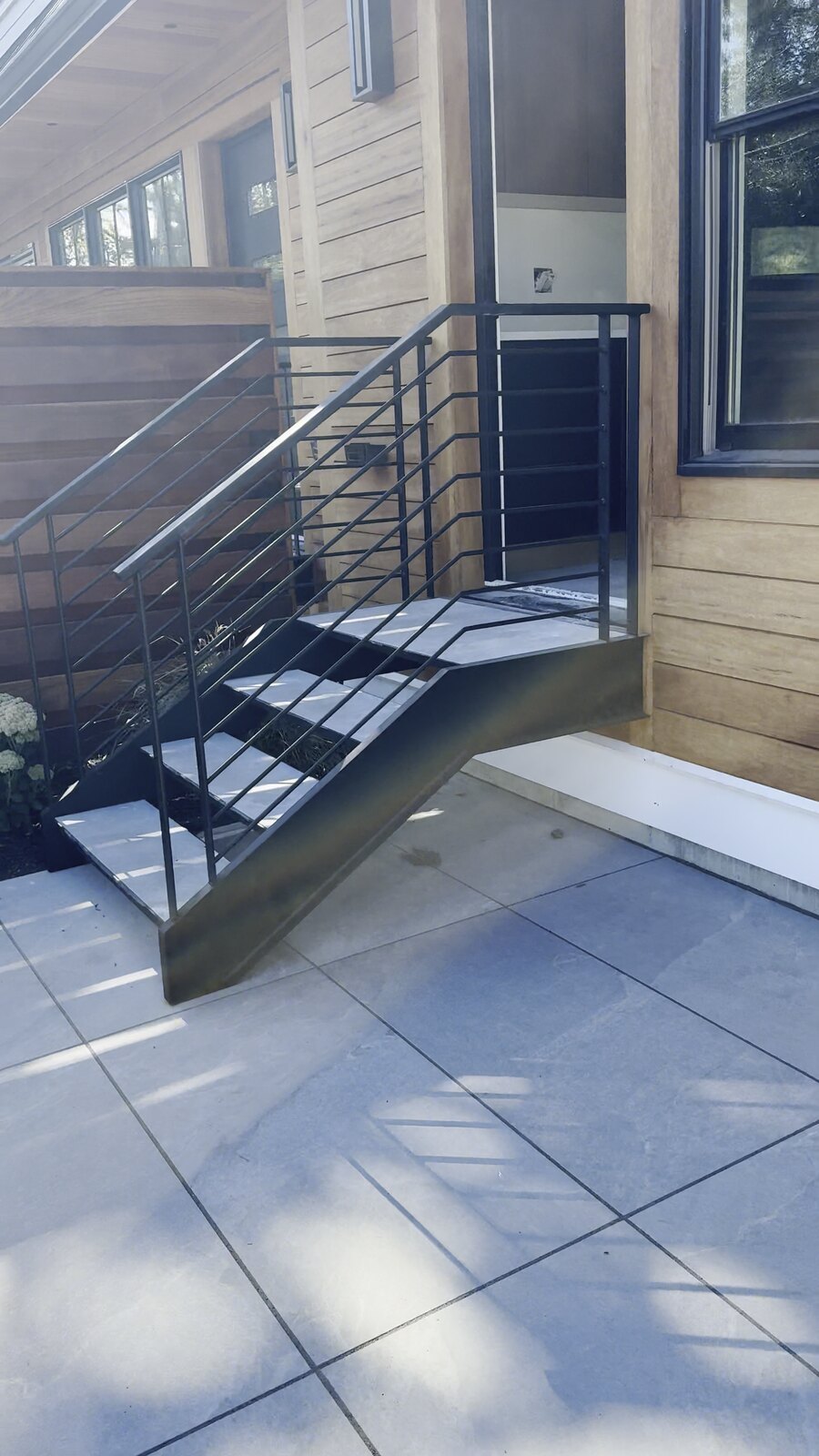
The stringer flares, it doesn't just stop
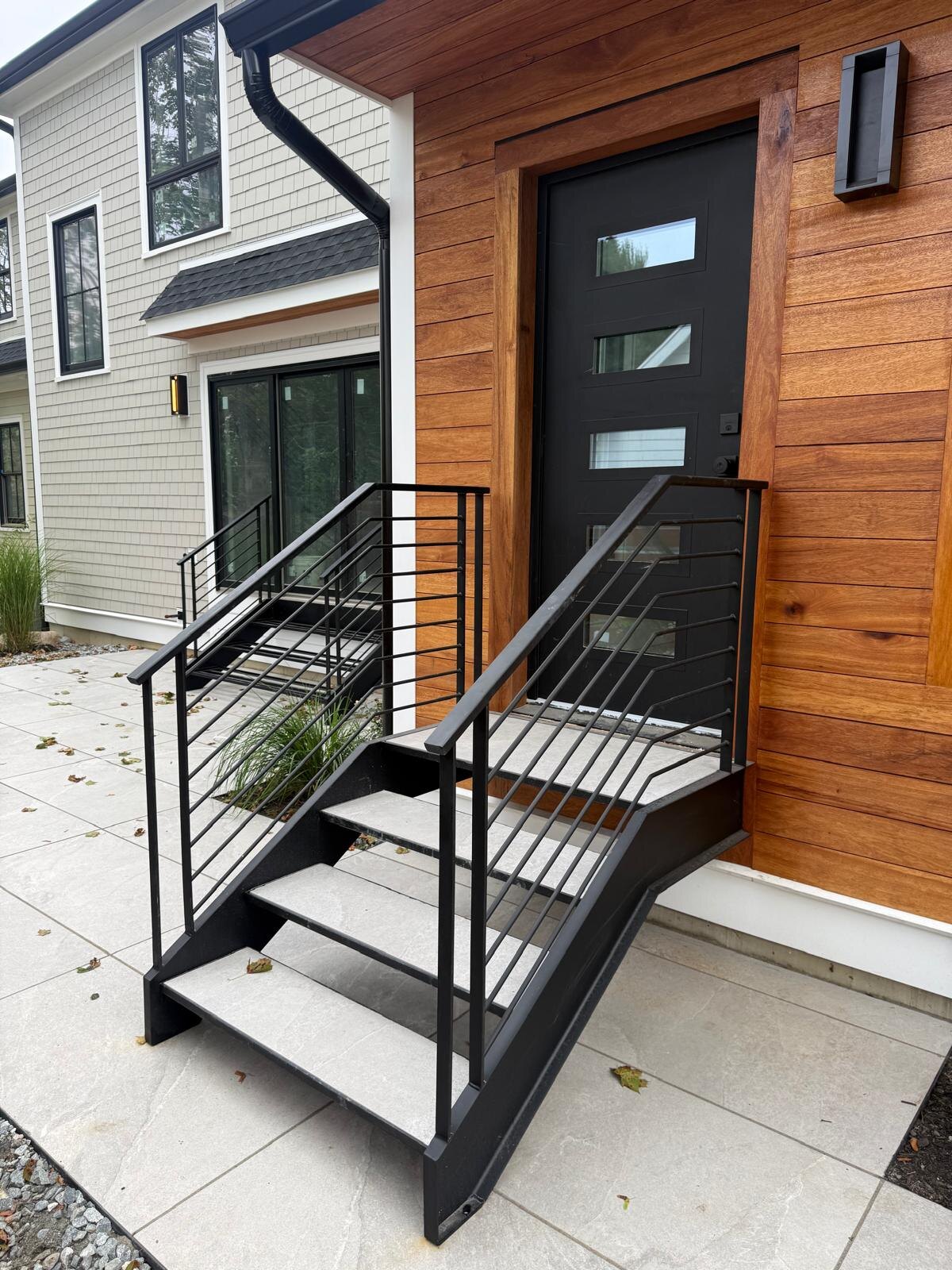
A stock stair ends in a square cut on a concrete pad. Ours sweeps out and down to the ground in one continuous plate, so the stair looks like it grew out of the terrace instead of being set on top of it. It is the single detail people notice first and can never quite name.
Open risers, so the entry stays bright
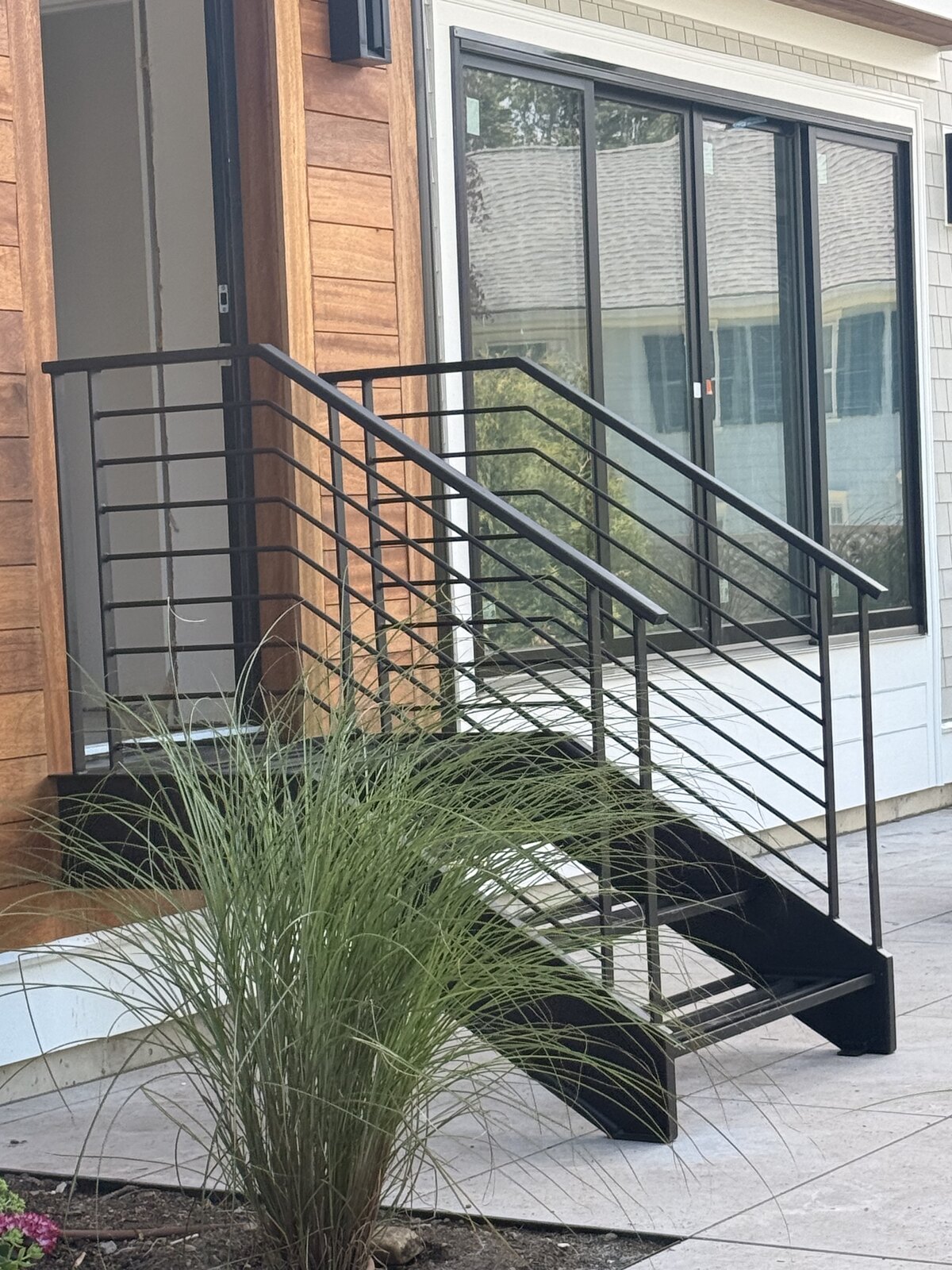
Nothing between the treads. Light passes through to the planting below, the stair reads as light rather than as a wall, and there is no closed pocket for leaves and snow to pack into.
A pan built for your tread, not a bolt-on
Every tread is a steel pan welded to the stringer at the depth of the material going into it. Porcelain, stone, wood, concrete, grating, or composite — the pan is cut for that material, so the finished surface sits flush and level with nothing exposed at the nose.
Measured, not ordered
We field-measure your opening. Every rise is equal, which is code and is also the difference between a stair that feels right and one that trips you.
Built for the freeze
New England takes stairs apart through water and ice. Sealed welds, drainage that works, and a coating chosen for your exposure.
Finished in our shop
Cut, welded, ground, and coated at our Everett facility — not assembled in your driveway from parts.
Code and inspection
Rise, run, guard height, and baluster spacing to Massachusetts code. Stamped drawings when your town wants them.
FIVE TREADS. ONE FRAME.
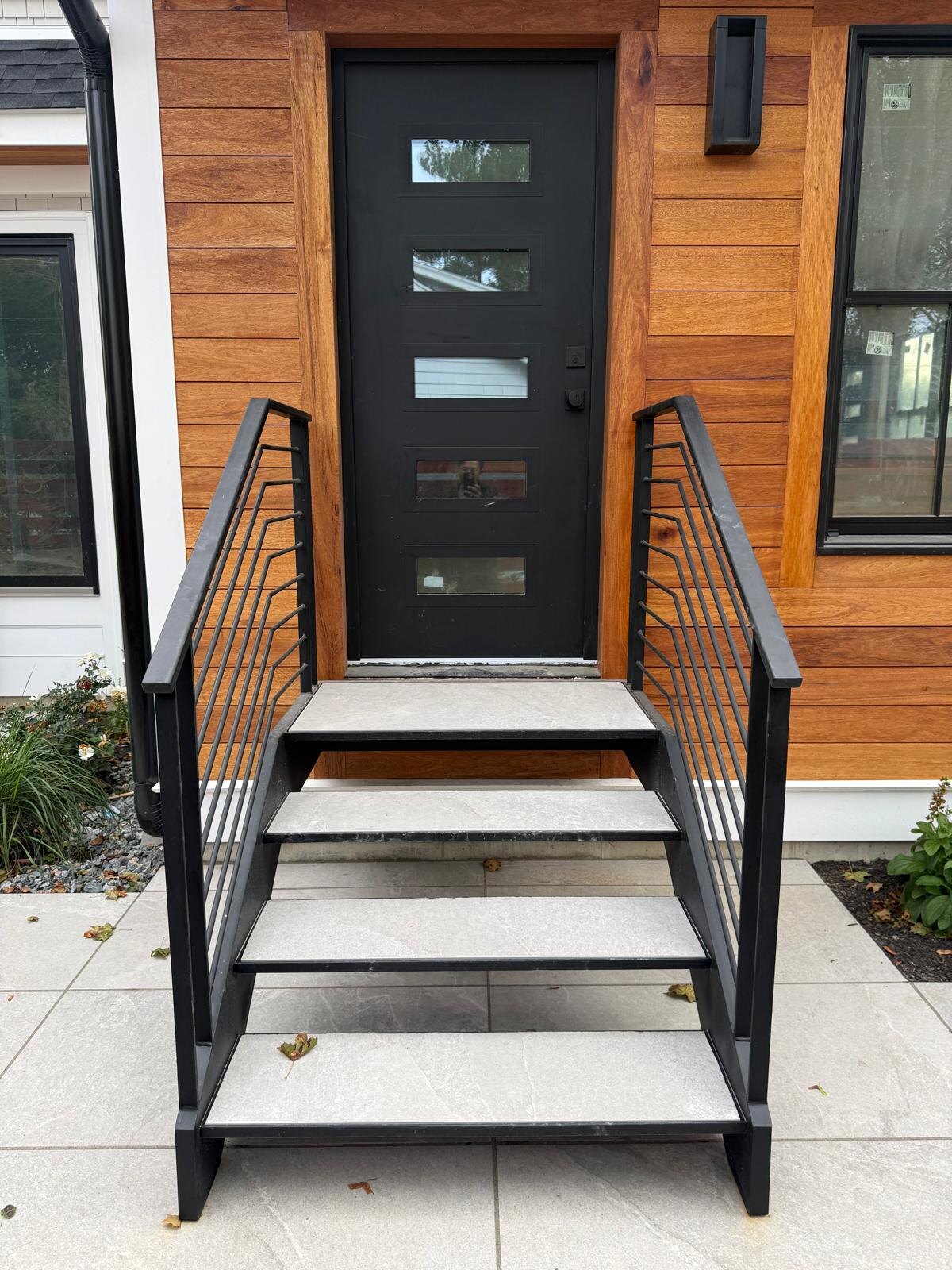
Porcelain
Large-format porcelain pavers set into a steel pan. Doesn't fade, doesn't stain, doesn't absorb water — so it can't spall when it freezes. Matches the patio you already have.
Best for: modern builds that continue the terrace material up the steps
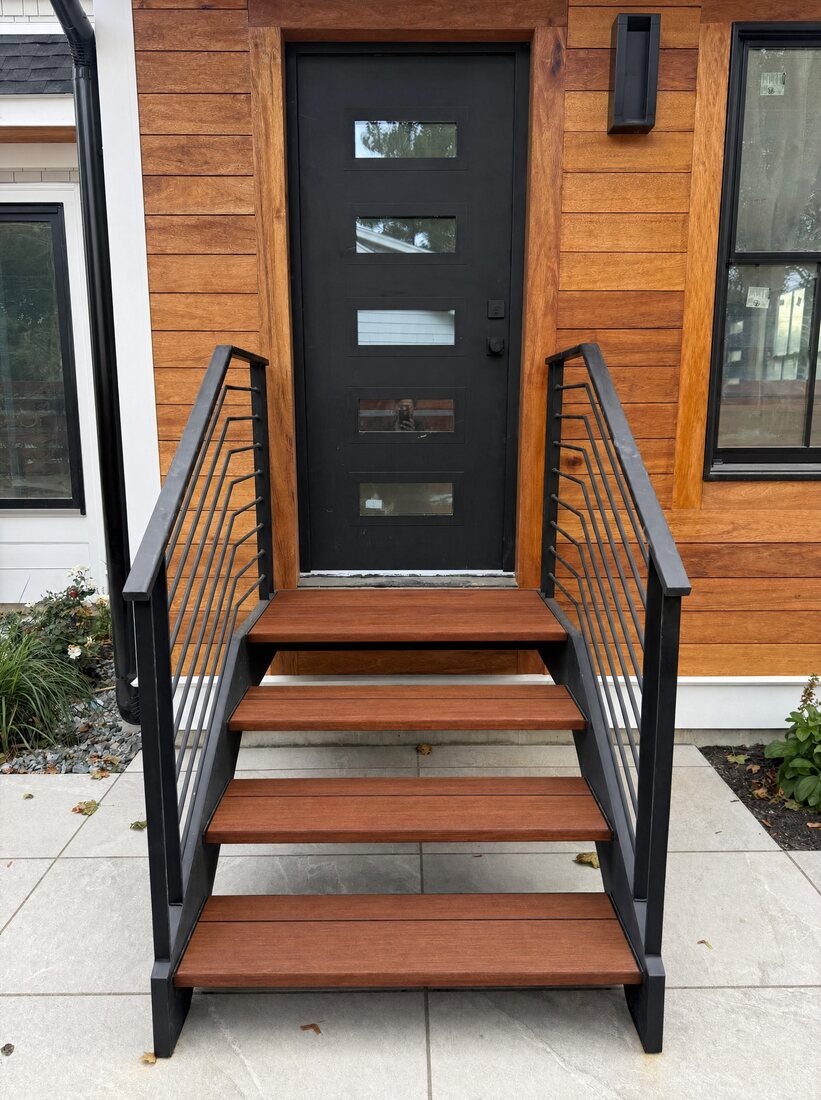
Wood
Ipe, mahogany, or cedar, screwed down from below so nothing shows on top. The steel does the structural work, so the wood is only a surface — it can be replaced in an afternoon, decades from now.
Best for: shingle, cedar, and craftsman homes
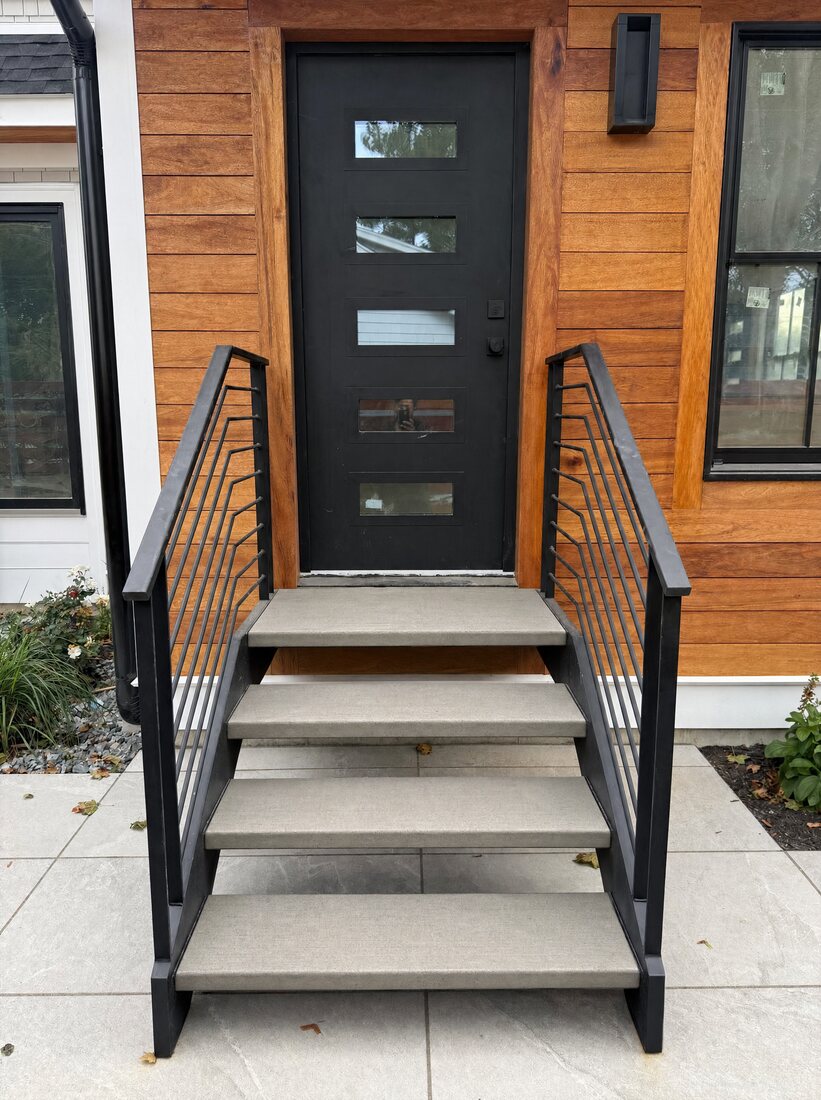
Concrete
Precast or poured-in-place concrete treads in the pan. Heavy underfoot in the way people read as solid, and it takes an integral color or a broom finish for grip.
Best for: contemporary and industrial exteriors
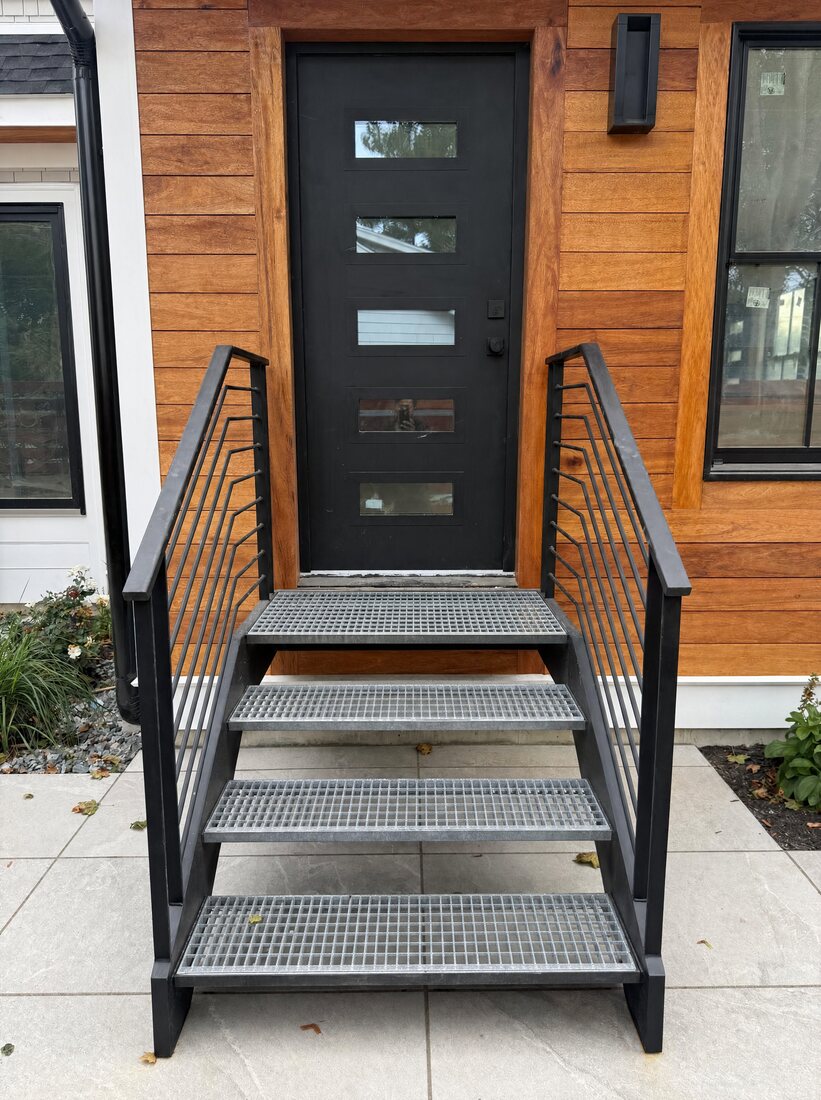
Bar Grating
Snow and rain fall straight through. No standing water, no ice sheet on the tread, no sweeping. The most maintenance-free tread we build, and the one fire departments and inspectors like best.
Best for: north-facing entries, roof decks, and anywhere ice collects
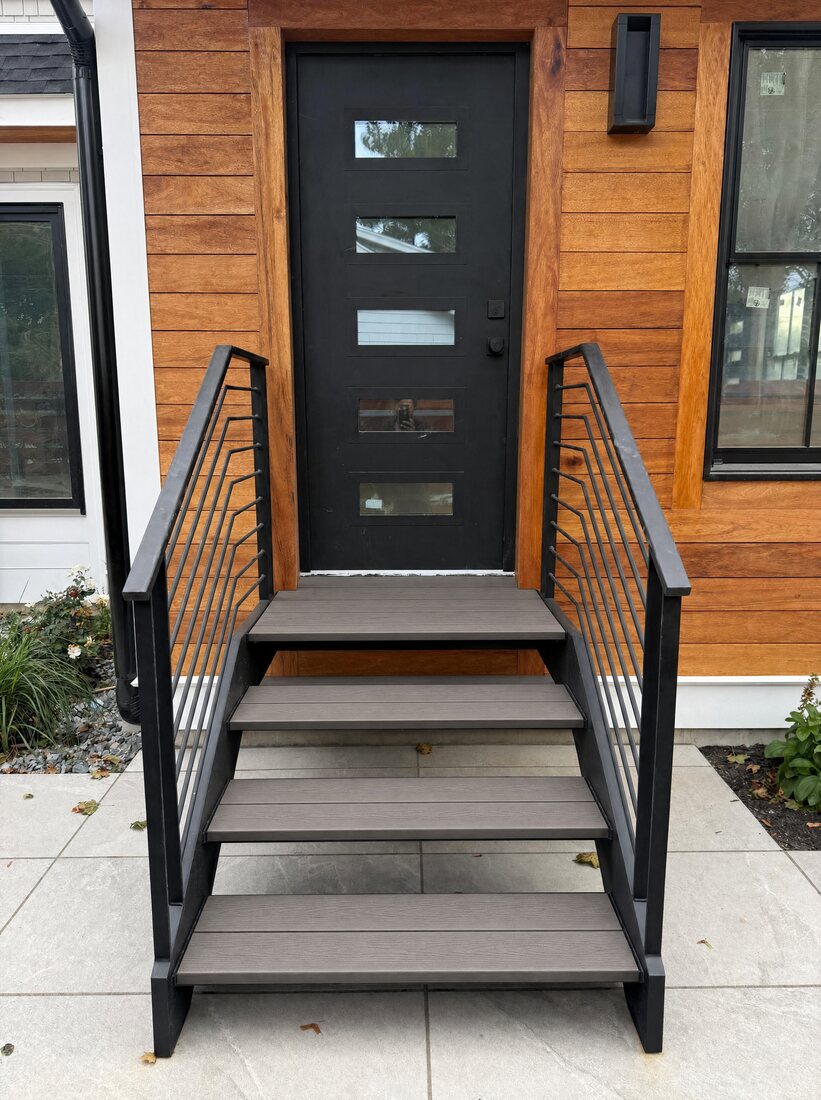
Composite
Trex, Azek, and the rest — the same board as your deck, carried onto the stair so the two read as one structure. No sealing, no splinters, no annual coat of anything.
Best for: matching an existing composite deck exactly
ANY COLOR. THREE WAYS TO PROTECT IT.
Black is what most people picture, and it is what you see in these photos. It is not the only option — the coating is a separate decision from the color, and the right one depends on how much weather your stair actually takes.
Standard Epoxy Paint
An industrial epoxy primer under a UV-stable topcoat, sprayed in our shop under controlled conditions. Any color. The most economical way to get a deep, even black — or anything else you want.
- Included in the base price
- Unlimited color choice
- Touch-up is simple and DIY-able
Hot-Dip Galvanizing
The finished steel is dipped in molten zinc at about 840°F. The zinc doesn't sit on the surface like paint — it grows into the steel as a series of zinc-iron alloy layers that are metallurgically bonded to it.
- Protects even where it gets scratched
- Decades before first maintenance
- Can be painted over for color
Powder Coating
Dry pigment applied electrostatically and baked on. The result is thicker and far harder than wet paint, in any RAL color and in matte, satin, gloss, or textured. Galvanize first and powder coat over it for the best of both.
- Chip and scratch resistant
- Any RAL color, any sheen
- Best paired over galvanizing
THE SAME STAIR, FOUR FINISHES
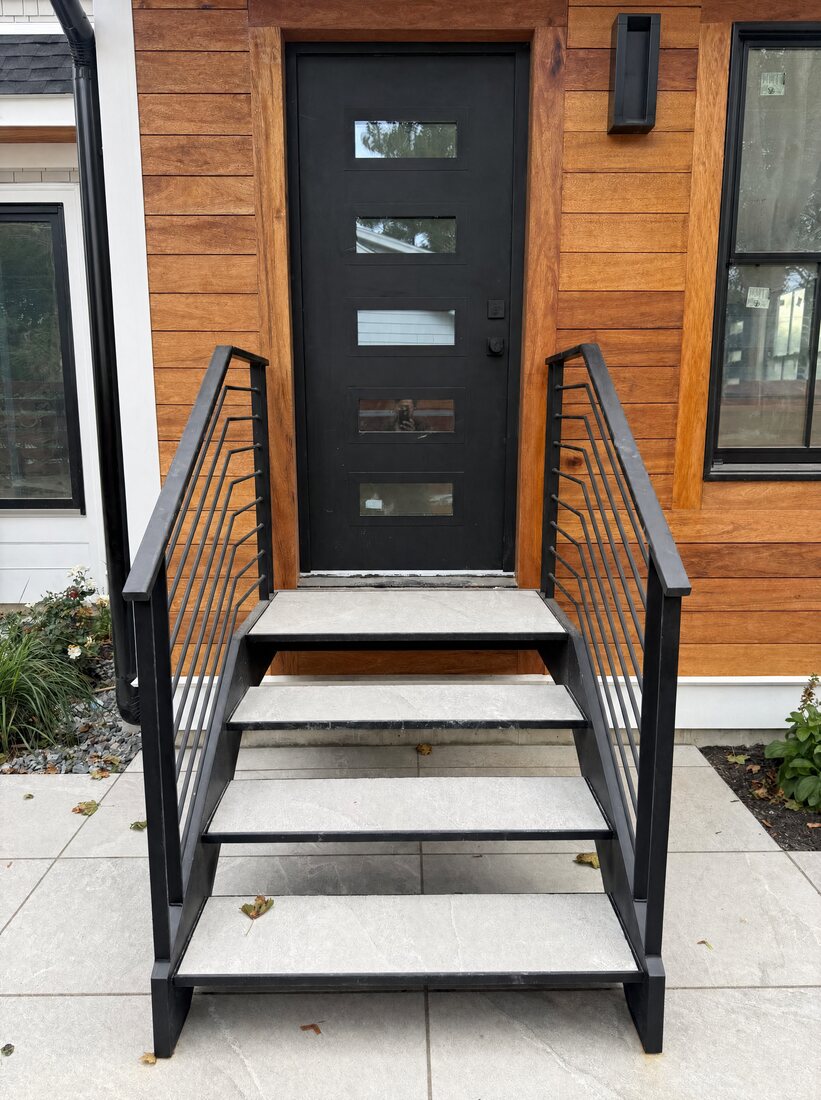
Satin Black
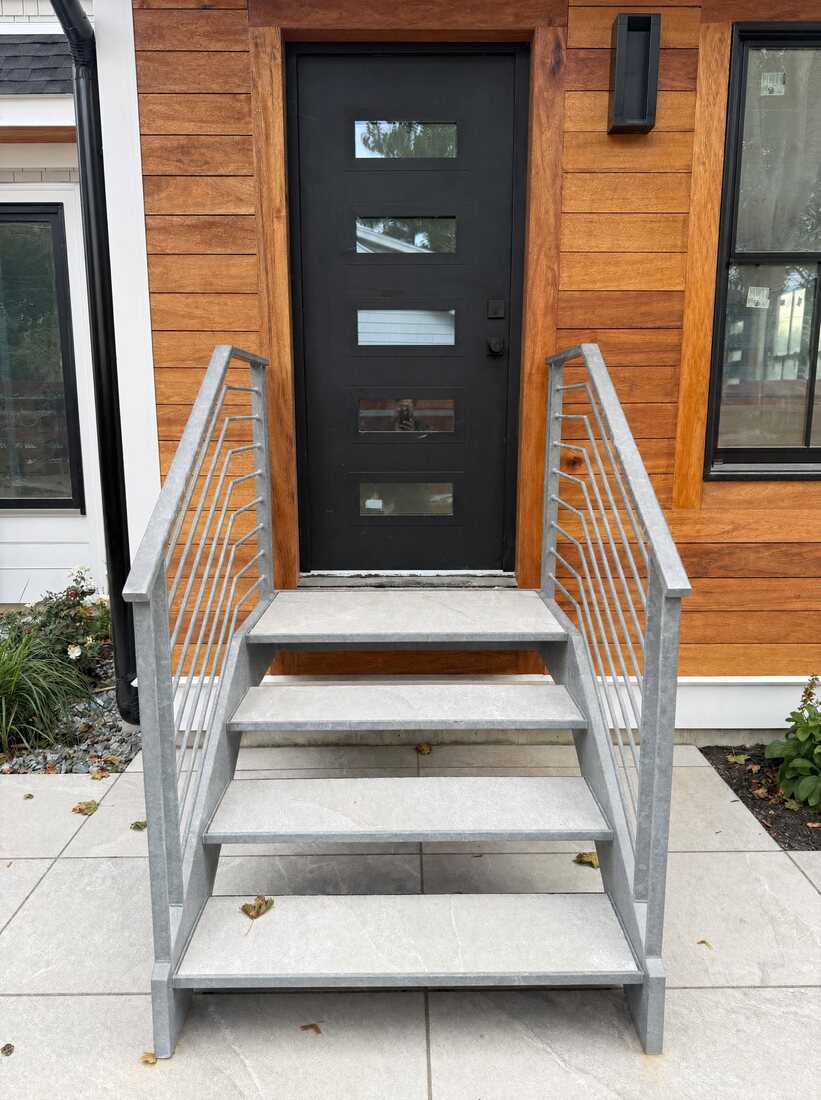
Hot-Dip Galvanized
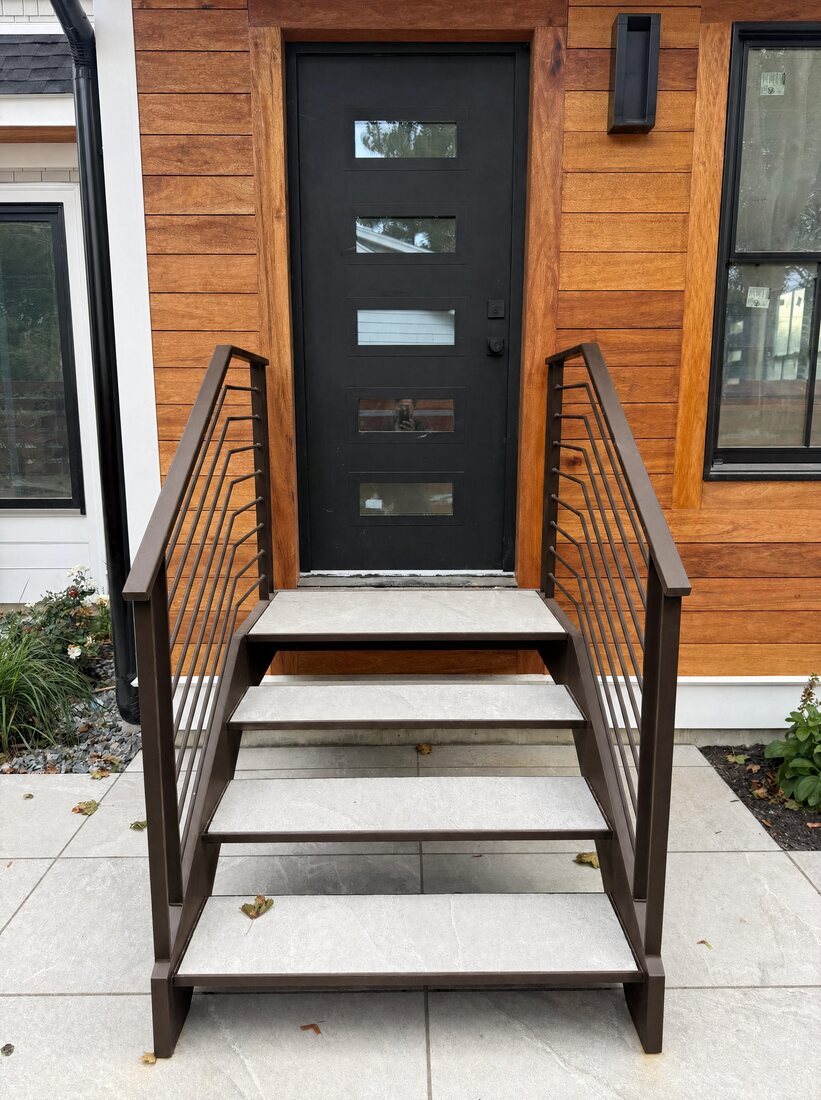
Dark Bronze
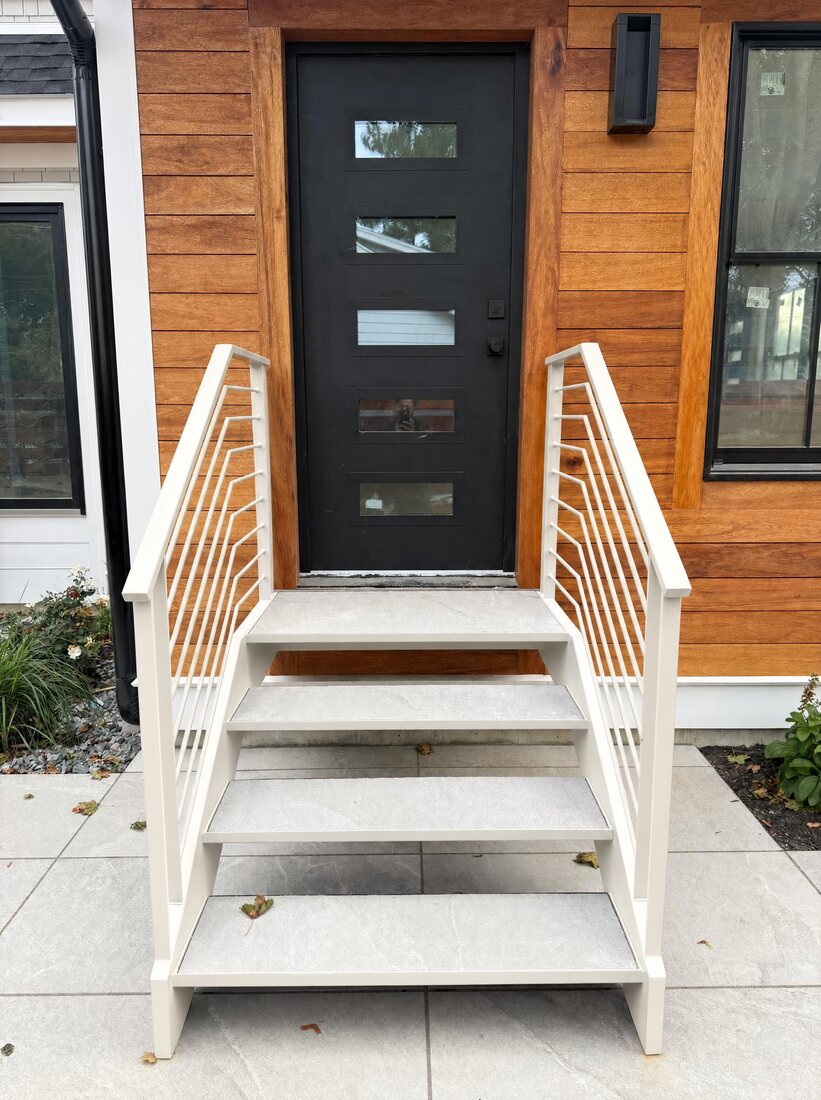
Warm White
FROM BARE STEEL TO FINISHED ENTRY
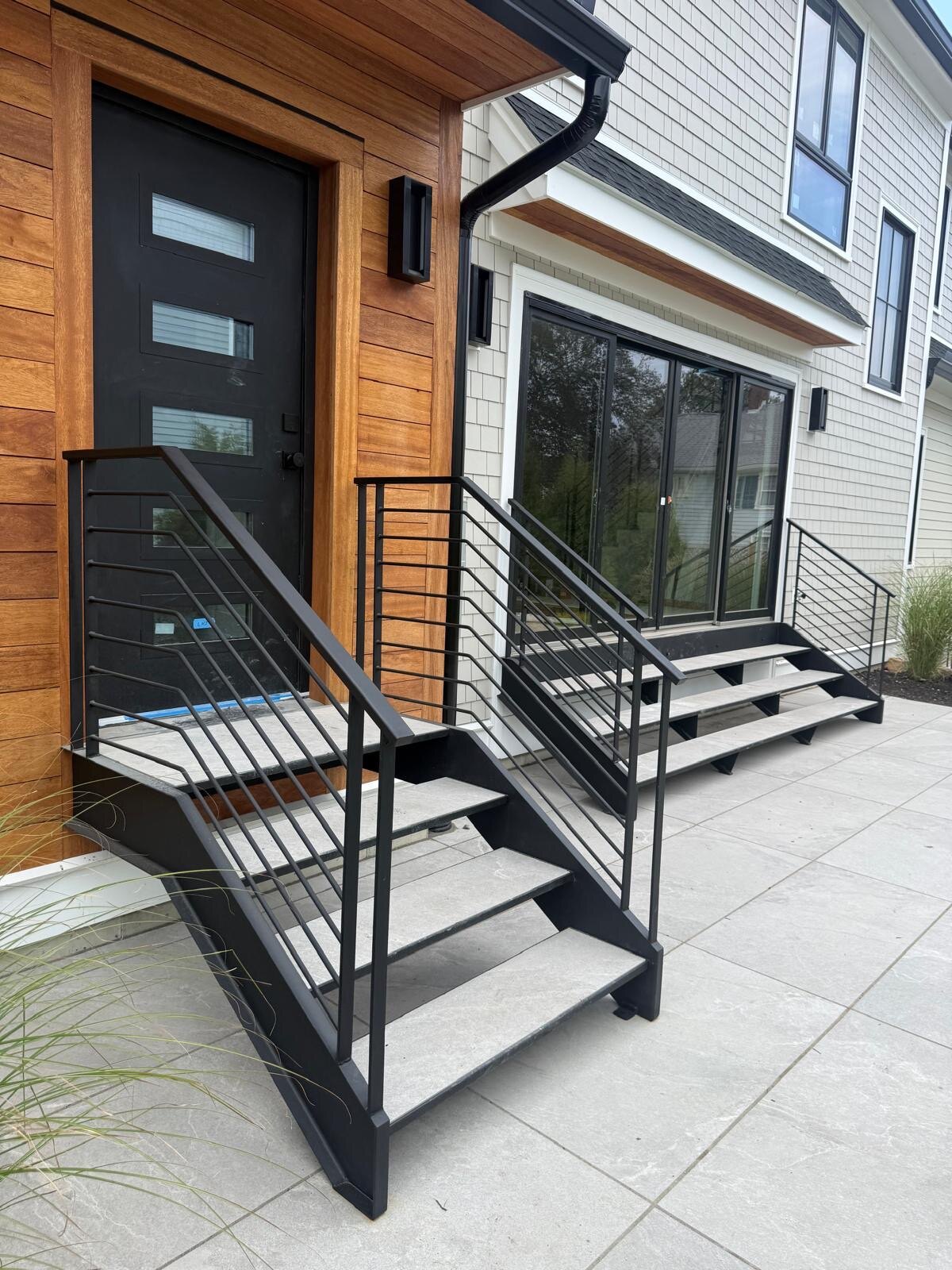
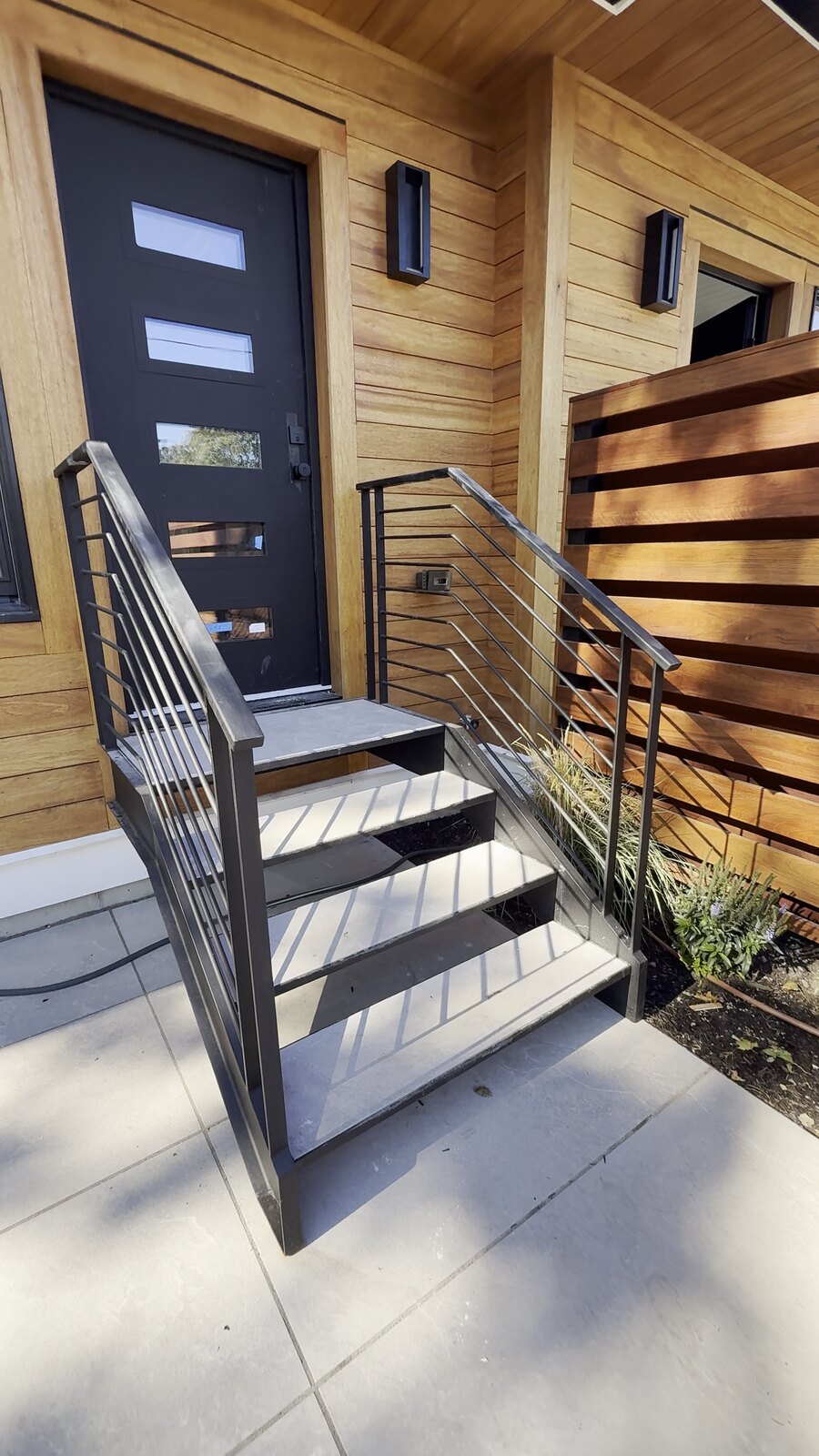
The same staircase, photographed through fabrication and after the porcelain went in. The frame is the product; the tread is the finish.
STRAIGHT ANSWERS
How long does hot-dip galvanizing actually last before it rusts?
Longer than most people expect. The American Galvanizers Association publishes time-to-first-maintenance data — the point at which about 5% of the surface shows rust — and for a standard structural coating thickness in a suburban New England environment that figure is measured in many decades, not years. Coastal salt air and direct road-salt spray are the harshest cases and shorten it, which is why we specify galvanizing most strongly for stairs near the ocean or on a salted street. What matters more than any single number is how it fails: paint fails at the first scratch, galvanizing does not.
Why doesn't a scratch in galvanizing rust?
Because zinc is more electrochemically active than iron. When steel is exposed at a scratch or a drilled hole, the surrounding zinc corrodes first and protects the bare steel — the coating gives itself up rather than letting the steel go. That's called cathodic protection, and it's the reason galvanizing behaves so differently from paint, which simply stops covering the metal at the point it's damaged.
Can I have a galvanized stair that isn't silver?
Yes. Galvanizing weathers to a matte gray, which some clients want and others don't. A duplex system — galvanize first, then powder coat over it — gives you any color you like on top of the zinc, and the two together last longer than either one alone because the paint slows the zinc's weathering and the zinc protects the steel wherever the paint is damaged.
Will it be slippery in winter?
That depends entirely on the tread you choose, which is why we ask early. Bar grating sheds snow and ice better than anything else. Porcelain is specified with a textured, outdoor-rated surface rather than a polished indoor tile. Concrete takes a broom finish. Wood and composite fall in between. We'll tell you honestly which one suits your exposure.
Do you handle permits and engineering?
Yes. Exterior stairs are governed by rise, run, guard height, and baluster spacing, and an entry stair is one of the first things an inspector looks at. We build to the Massachusetts code as a matter of course and provide stamped drawings when the building department asks for them.
How long does the whole thing take?
Typically four to eight weeks from approved drawings to installation, depending on the finish. Galvanizing and powder coating add time because the steel travels out to the coater and back. Install itself is usually a single day.