Short answer: pick swing or slide from your driveway's slope and space, set the posts below the frost line (often about 48 inches in Massachusetts; your town decides), choose a galvanized-and-coated finish, and run a conduit for an opener before anything gets paved, even if you are not automating yet.
Most of the gates we get called back to fix were not badly made. They were built for the wrong opening: a swing gate on a driveway that climbs, posts that heave every February, or an opener bolted onto a frame that was never meant to carry one. The design choices below are the ones that decide whether a gate still closes cleanly ten winters from now.
1. Swing or slide: let the driveway decide
A swing gate opens in one or two leaves. Each leaf needs a clear arc on the side it opens into, and that ground should be close to level. If the driveway rises behind the gate, the bottom of the leaf hits the pavement before it opens fully. A double swing gate splits the weight across two posts, which helps on wide openings.
A sliding gate rolls along the fence line on a track or cantilevers off rollers. It needs straight run-back room roughly the width of the opening, but it does not care much about slope and it does not swing into a car or a snowbank. On short driveways that meet the street, sliding is often the only practical option.
2. Posts and footings are most of the job
A driveway gate is a long lever. All of its weight hangs off one hinge post, and frost moves anything that is not anchored below it. In Massachusetts, footings around 48 inches deep are common; the exact depth for your property comes from your town's building department. We size posts and footings for the actual leaf weight, and heavier for any gate that might get an opener later.
If you have an old gate that drags or will not latch, check the hinge post first. A post that leans a few degrees after the ground froze will make the latch side drop more than an inch on a wide leaf.
3. Material and finish
- Steel is what most "wrought iron" gates are made of today. It is strong, weldable and can be forged into scrolls, collars and finials. (Our wrought iron vs. steel guide explains the difference.)
- Hot-dip galvanizing coats the steel in zinc inside and out. Under a powder coat or paint, it is the longest-lasting finish we know of for road salt and coastal air.
- Paint over bare steel costs less up front but needs touch-ups sooner, especially along the bottom rail, where water and salt sit.
- Aluminum is light and will not rust, but it does not forge, and it flexes more on long leaves.
Ask any fabricator, us included, exactly which of these your quote includes. Two quotes that look alike often hide a big difference in finish.
4. Automation: plan it even if you are not buying it yet
An opener needs power at the hinge post, a stiff frame and hinges rated for the load. Gate operators sold in the US are expected to meet the UL 325 safety standard, which calls for entrapment protection such as photo-eyes or safety edges. The cheapest time to prepare is before paving or landscaping: one conduit to the post now saves cutting the driveway later.
Keypads, remotes, intercoms and phone apps can all be added once power is there.
5. Design that matches the house
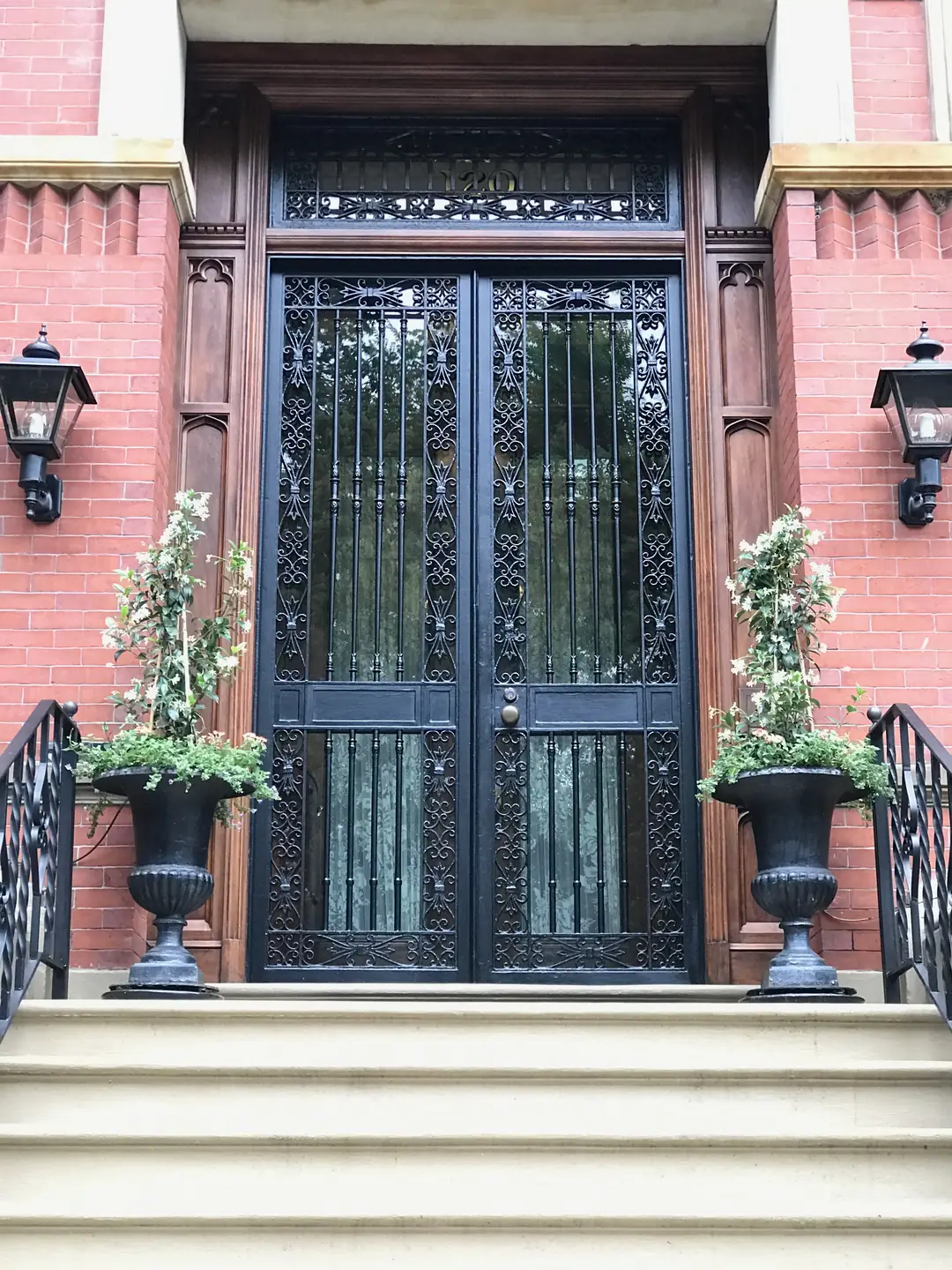
Start from what is already on the property: the railing on the front steps, the fence, the window grilles. Pickets, top rails and scroll patterns that echo those details look like they belong. We draw the gate to your measured opening, with the picket spacing and top line worked out on paper before any steel is cut. You can see some of our past work in the portfolio.
6. Repairing an existing gate
Not every gate needs replacing. Worn hinges, a heaved post, rust at the bottom rail or a tired opener can usually be fixed. We do gate repair and restoration as well as new gates, and we will tell you plainly when repair is not worth it.
Getting a quote
Send us a few photos of the opening with a tape measure in the shot, and tell us whether you want swing or slide, manual or automatic. We build in our Everett, MA shop and install from Boston out through Worcester County. Request a free quote or call (617) 404-2589.
Common questions
Should I get a swing gate or a sliding gate?
A swing gate needs a clear, fairly level arc on the side it opens into. A sliding gate needs straight room along the fence line, roughly the width of the opening plus a little overlap, but it handles sloped and short driveways much better. Look at your driveway before you look at designs.
How deep do gate posts need to go in Massachusetts?
Below the frost line. Footings around 48 inches deep are common in Massachusetts, but your town's building department sets the number for your property. Shallow posts are the most common reason a gate sags or stops latching after a winter or two.
Can I add an automatic opener later?
Yes, if the posts, hinges and frame are sized for it from the start and a conduit for power runs to the post before any paving or landscaping goes in. Tell your fabricator on day one if automation is a possibility.
What finish lasts longest on a steel gate?
Hot-dip galvanizing under a powder coat or a quality paint system holds up best against road salt and coastal air. Paint alone over bare steel needs touch-ups sooner, especially along the bottom rail where water and salt sit.
Do you work outside Boston?
Yes. Gates are built in our Everett, MA shop and installed across Greater Boston, the North and South Shore and out through Worcester County, including Shrewsbury and the towns around it.